
Dunkin’s Hot Food Potential

I did a breakfast-for-lunch stop at Dunkin, mostly to see where the brand really sits right now without leaning on the donut crutch. This store still has the older “Dunkin’ Donuts” signage, which is interesting given the company rebranded in 2019 to simply “Dunkin.” It’s the same move KFC made years ago, trim the food cue from the name so you can credibly sell more than the thing you were born to sell. But no matter what’s on the sign, most people still show up thinking coffee and donuts first. That legacy is both the strength and the ceiling.
Nostalgia and Breakfast
I’m not a heavy Dunkin regular, so consider this a consumer-first read with a little distance. I grew up on those strawberry Coolattas and sprinkle donuts, that’s the nostalgia lane. As an adult, my stops are rarer, but I keep an eye on breakfast because it’s one of the few QSR dayparts with real growth potential: routine, repeatable, and price sensitive. If a brand can win the route-to-work habit even a couple days a week, the math gets friendly quickly.
An Unexpected Detour Indoors
The drive-thru at this location was closed for construction. The app didn’t indicate that, so I drove up fully expecting to grab my mobile order through the drive-thru before realizing it was blocked. That missing link between store status and user visibility in the app might seem minor, but it’s a friction point that adds up across locations.
Silver lining: I got to actually see the flow. I had already ordered through the app, so the only adjustment was picking it up inside at the to-go counter instead of the window. Counters were clean, staff was polite, restroom wasn’t scary. That usually means the GM cares and the basics are under control. It also meant I had to step inside rather than simply idling at the drive-thru, fine for this test, but it highlights where Dunkin’s app-to-store communication still has room to improve.
I kept the order focused on the hot-food question and away from donuts: the $6 meal deal (iced coffee, bacon-egg-cheese, hash browns) with the sandwich on sourdough and a new chipotle aïoli add-on, plus a separate croissant “chicken sandwich” stripped down to just croissant and chicken so I could taste the protein without camouflage.
Hash Browns
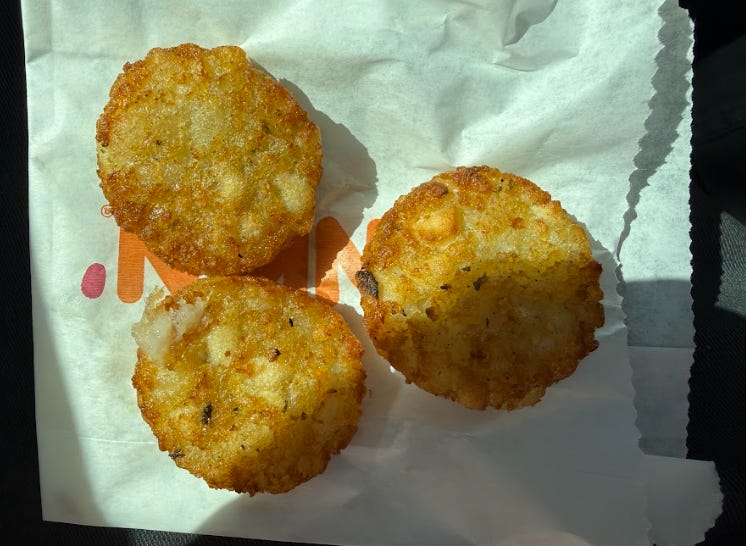
The hash browns were a small surprise in a good way. Dunkin’s little medallions can be great when they’re fresh and pretty depressing when they aren’t. Too often they fuse into a lukewarm, oily slab inside the bag. Today was the best version, hot, crisp edges, soft centers, enough structure to dip without falling apart. That tells me the underlying product is fine and the real issue is freshness discipline. On a good day like this, they go toe-to-toe with anyone’s medallions; on a bad day they taste like compromise. Today was clearly a good day.


The Sourdough BEC
The sourdough BEC with the
new chipotle aïoli landed squarely in “good enough” territory, but that aïoli addition elevated it noticeably. The sauce is one of Dunkin’s newer launches, and I specifically added it as an option to my sandwich. That turned out to be a really good move, it brought balance and helped the whole thing feel more complete, tying together the egg, bacon, and bread instead of letting them each sit as separate layers. Honestly, Dunkin should consider making this sauce the default on the BEC because it rounds out the flavor profile without overpowering anything.
The bread behaved like a proper carrier, light toast, soft give, a little chew, no messy crumb explosion. It won’t win any sourdough purist awards for tang, but it does what it needs to do and lets the fillings lead. The egg is the standardized, ring-mold patty most chains use. It’s not a fresh-cracked McMuffin puck, but it didn’t go rubbery or sulfurous, which is the real test. Bacon was the typical pre-cooked strip, easy to hate when it’s flabby, but this had enough tear and a little crisp. The chipotle aïoli adds just enough smoke and tang to keep the sandwich from fading into beige. For six bucks with coffee and hash browns, that sauce is doing more work than it gets credit for.
The Coffee Baseline
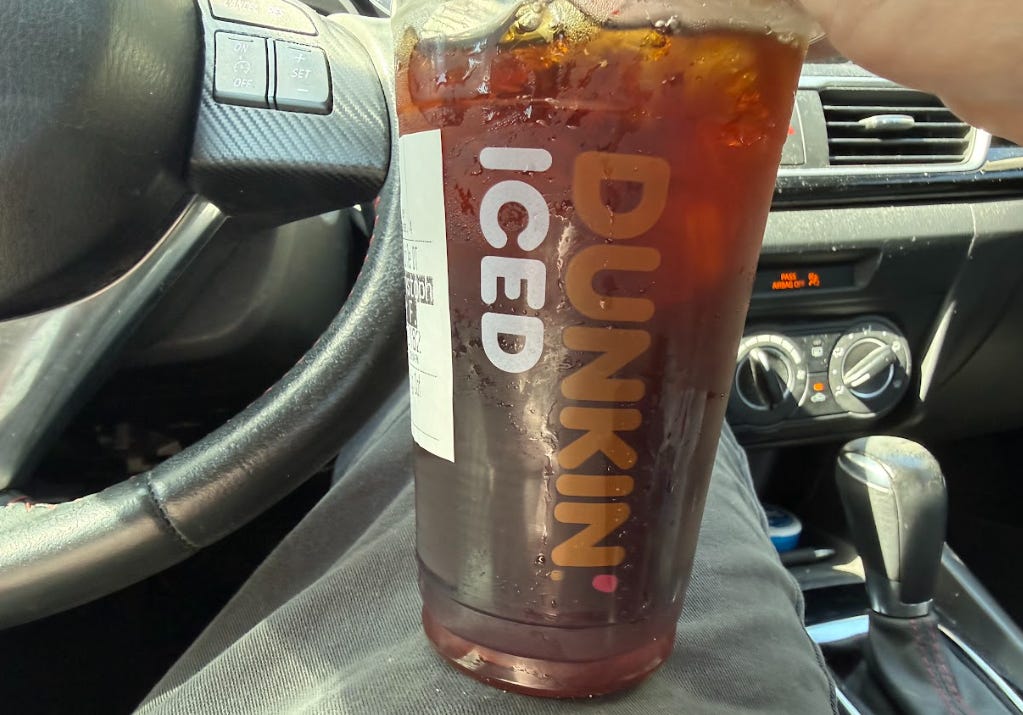
Speaking of coffee, I drink it black, so there’s nowhere to hide. Dunkin’s iced coffee is perfectly serviceable, which, in mass-market coffee, is a compliment. No ash, no sour grassy aftertaste, just straightforward roast with a clean finish. People who swear by Dunkin coffee are responding to consistency and ritual as much as flavor. If you want a daily cup you won’t overthink, this still checks out.
The Chicken Test
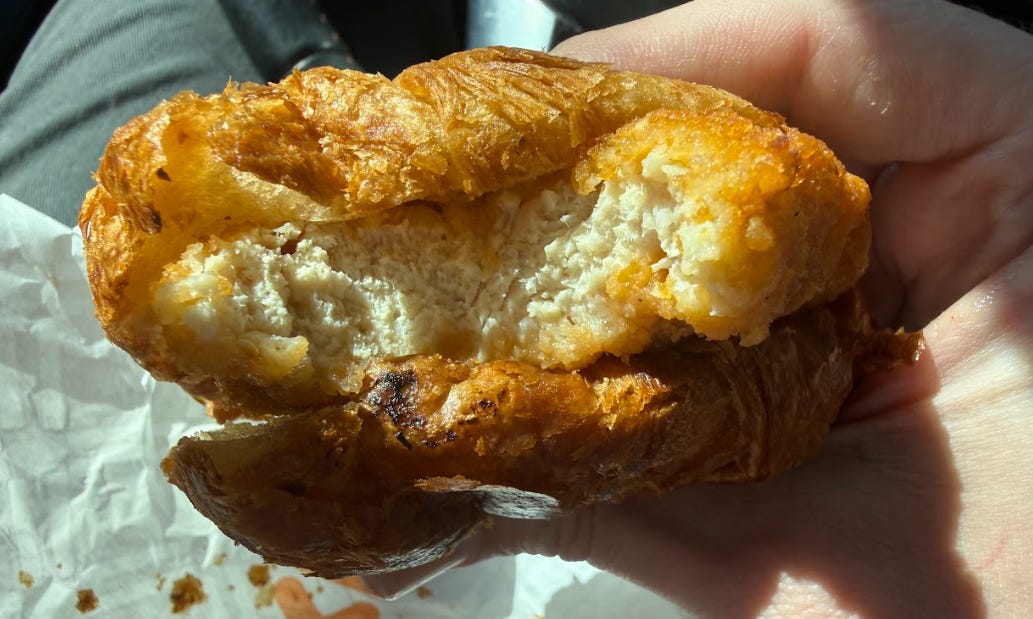
Then there’s the chicken test. I ordered the croissant “chicken sandwich,” removed egg, cheese, and sauce, and tasted the base. If hot food is going to be a bigger pillar for Dunkin, the protein has to be credible by itself. The croissant is actually good, square, flaky, sturdy, buttery enough without turning greasy, and clearly designed for sandwiches. If Dunkin ever leans harder into “bakery sandwiches,” this is the bread to build around.
The chicken, though, is the ceiling. I believe it’s that formed piece that mimics muscle strands, akin to what you’d find in the frozen aisle of a grocery store as a pre-fried, breaded patty. The crust never gets truly crisp. Worse, it’s undersized for the croissant, so you get multiple bites of “just bread.” You can sauce and cheese it into acceptability, but the ceiling is low. The croissant is ready for prime time; the chicken isn’t.
That points to the bigger thing going on in the back of house. From what I can tell, Dunkin runs a sub-assembly model: heat proteins, toast bread, assemble, wrap. That’s more flexible than Starbucks’ “heat the entire pre-built sandwich in a turbo oven,” because Dunkin can swap individual components over time and adjust a hold window without reformulating the entire SKU. The flip side is obvious: if any single piece is a little old or under-heated, the whole sandwich reads tired. On the day I visited, the team was on top of freshness; if they make that the norm, a lot of other issues fade.
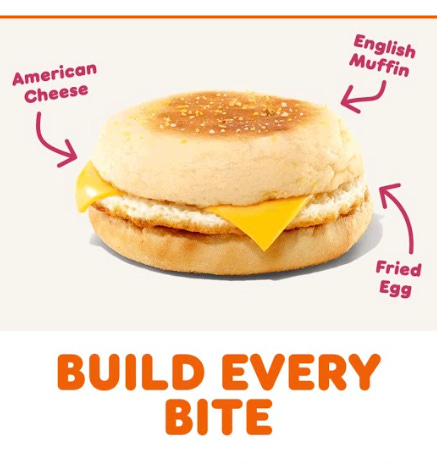
Interestingly, recent marketing around “Build Your Own Bite” shows that Dunkin is acutely aware of this operational strength and sees flexibility as part of its future brand identity.
The Broader Positioning
So where does that leave the food strategy? Dunkin doesn’t need to act like a chef brand. It needs to be the reliable hot breakfast brand that happens to also sell donuts and iced coffee. The foundation is closer than the reputation suggests. The bread program is solid, sourdough is competent; the croissant is genuinely strong. Bacon is fine; sausage is usually dependable. Eggs are okay but could use a small uplift in texture and heat just to sell the first bite. Rather than chasing items like that fried chicken patty, which are hard to keep consistent and have a low quality ceiling, Dunkin should double down on what already works. Make the breakfast staples, the BECs, bagels, and hash browns, unfailingly good and hot, and build quality within those core components instead of adding new complexity. The encouraging part is that most of these improvements are operational, not structural. You don’t need a menu overhaul to make Dunkin breakfast feel “made now.” You just need crisp hash browns, fresher eggs, and consistent assembly that communicates care.
Competition and the Opportunity
The competitive frame has shifted too. Dunkin has always been positioned as Starbucks’ blue-collar cousin, but that’s the wrong lens. Starbucks is a third-space brand; Dunkin is a throughput brand. The more relevant set is McDonald’s, Wendy’s, and the local drive-thru coffee chains that have quietly gotten very good at hot food, plus gas-station convenience players like Wawa and RaceTrac, which now serve breakfast sandwiches that rival fast food in speed and freshness. McDonald’s still owns the mass-market McMuffin experience, but pricing backlash has created an opening for value perception moves. Wendy’s has credible breakfast sandwiches but uneven momentum and even reports of franchisees scaling back in weaker markets. The locals and convenience chains are siphoning off routine morning buyers with cheerier drive-thru culture and surprisingly decent food. Dunkin can win against that group by being fast, hot, and fairly priced, and by tuning the things guests notice most: crisp hash browns, hotter eggs, and sandwiches that taste fresh-made.
A quick note on the in-store feel since I didn’t drive-thru: the line moved, staff communicated clearly, and even with construction outside, the place didn’t feel overwhelmed. Clean stores usually correlate with better food because the same discipline that keeps counters wiped down usually keeps hash browns in the fryer two minutes longer. Small things compound.
Conclusion
Where I land: the hash browns were legitimately good; the BEC on sourdough with chipotle aïoli was a solid value and tasted like someone cared just a little; the iced coffee did its job without drama; and the chicken croissant told me exactly where the brand needs to simplify. Dunkin doesn’t need new menu showpieces, it needs consistent, well-executed breakfast basics. If they ensure those core items hit hot, crisp, and balanced every time, Dunkin could easily move into the same morning decision set as McDonald’s, Wawa, and Wendy’s, not just Starbucks. They already own habit and price signal; now they just need to make the bag feel “fresh and hot” when it hits the passenger seat.
No reinvention required. Just reliable, well-done breakfast, every day.